Here is an interesting video I found of an interview of Lyudmila speaking at the 8th Pen World Voices Festival of International Literature. This is one of the only videos I could find with really good english subtitles. The Pen Institute has been apart of freeing hundreds of writers around the world who have been imprisoned for their writing and defending freedom of expression. I found this video interesting after reading the article of Lyudmila in the New Yorker. Lyudmila is known for her strong standing for freedom of expression in her works. For example, in her book The Big Green Tent, she was not afraid to write about the censorship of the Soviet Union. It is a rather lengthy video, but worth watching to see in person how she truly is an advocate on the subject.
Wednesday, April 29, 2015
( Video ) In Conversation: Ludmila Ulitskaya
Here is an interesting video I found of an interview of Lyudmila speaking at the 8th Pen World Voices Festival of International Literature. This is one of the only videos I could find with really good english subtitles. The Pen Institute has been apart of freeing hundreds of writers around the world who have been imprisoned for their writing and defending freedom of expression. I found this video interesting after reading the article of Lyudmila in the New Yorker. Lyudmila is known for her strong standing for freedom of expression in her works. For example, in her book The Big Green Tent, she was not afraid to write about the censorship of the Soviet Union. It is a rather lengthy video, but worth watching to see in person how she truly is an advocate on the subject.

Friday, April 24, 2015
Chapter Two:
While Alik is deteriorating more and more, it is clear that the title of the story revolves around him. What I found interesting in this chapter was a trail of Anti-Americanism, even down to the most minuet thing. For example, there is a section where one of Aliks friend, Maria Ignatevna, goes to the kitchen to make make some tea. The heat was still unbearable in the apartment, but it was stated that Maria made and drank hot Russian tea, not iced American tea. Further in the chapter it talks about what Alik should do if he dies from asphyxiation in the next few days. The point is made that " The question is for Americans in these cases - when to switch off the machine". It is made clear in this chapter that Maria is not nesscessarily the happiest person living in the United States, and it is also clear that she does miss her homeland of Russia.
Chapter One:
The story starts off talking about how unbearable the heat and humidity was in the city. Alik goes on to explain and describe how the women of the house went with out clothes for many days. In this chapter we are introduced to Five women sitting in the bed room, Nina, Valentina, Gioia, Irina, and Maika. Valentina is the first person the Alik introduces to the reader. She is described as being large breasted and early ever wore a bra. Nina is a young thin women with long hair. She is not Jewish because he makes note that she wears a gold cross. Gioia is an italian women who lives next door. Gioia hangs out with Alik and the rest of the women hoping to learn some Russian. Since she isn't Russain she is always taking offense to the things that they say around her, however she is always forgiving to them not matter what they say. Irina was a former circus acrobat, but now works a highly paid lawyer. Alik goes into further detail about her beauty. He describes how she "looked stunning with her waxed bikini line". Maika is Irina's 15 year old daughter. Miaka is a small plump girl with glasses, she's been given the nickname Teeshirt by everyone. Also out of the 5 women sitting in the bedroom, Maika was the online wearing clothes. Ludmilla style of putting great detail into the description of her characters, helps the reader paint a picture of them early off into the story. Also I find it odd that she would start off a story about death with 5 women (4 of which are almost naked) sitting in a room. The first thing that came to my mind when I read that section of the story I thought to myself that, it doesn't relate to death at all. The beginning of the story paints a picture of love, compassion, and sex. But upon further reading in the chapter we find out that Alik and Nina are married. However they have never had any children, and even if they wanted them now, they are too old and we find out that Alik is in no shape to function. Ali has some sort of slow paralysis taking over his body. To make things worst has been along time since he had had any money.
Friday, April 17, 2015
Ludmila Ulitskaya Against the State - The New Yorker

Link to Article: http://www.newyorker.com/magazine/2014/10/06/weight-words
In 2010 The New Yorker published an article talking about Lyudmila's new book titled The Big Green Tent. The story is about about a man named Mikha living in post World War II Soviet Russia. Mikha arrives to work late after a long night of reading. To his surprise his colleagues covered for his late arrival. After he finds out that his colleagues covered for him he felt the need to share with them what he read about the night before. Mikha approaches an older co worker of his and shares with him a set of photographs of manuscripts that could not have be published. His co worker is astonished at the fact that Mikha has committed a crime by reading and owning these manuscripts. Mikha ends up being reported to the authorities, losing his job and ultimately his life.
The article goes into further depth of the restrictions the the Soviet Union set up during its presence in Russia and how Lyudmila used this book to open the worlds eyes toward the strict restriction that was set during her early childhood growing up there. Its a very interesting article about how she quote on quote "a book could be used to inspire a murder weapon".
The Funeral Party
I selected to read The Funeral Party as my first piece of literature written by this author. In a short summary, the story takes place a small sweltering hot Manhattan apartment during the summer. A group of Russain immigrants come to attend the the side of one of the main characters, Alik, deathbed. They pass time by reminiscing the wonderful life that Alik had, reliving old memories and rivalries, and most importantly drinking vodka. All awhile trying to stay informed about an upheaval happening in their homeland.
Works Written by Ludmila Ulitskaya
- Sonechka - 1995
- Medea and Her Children -1996
- The Funeral Party - 1997
- Kukotsky's Case - 2001
- Women's Lies - 2003
- Sincerely Yours, Shurik - 2003
- The People of Our Tsar - 2005
- Daniel Stein, Interpreter - 2006
- Russian Jam and Other Plays - 2008
- Imago (The Big Green Tent) - 2010
Saturday, April 4, 2015
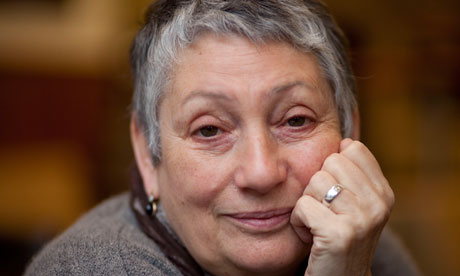
About Ludmila Ulitskaya
Ludmila Ulitskaya born February 21st, 1943 in Davlekanovo, Russia. She studied at Moscow State University and received a degree in genetics. After college she worked in the field of genetics and biochemistry. She began her literary career later in her life when she joined a Jewish drama theatre as a literary consultant.
Subscribe to:
Posts (Atom)